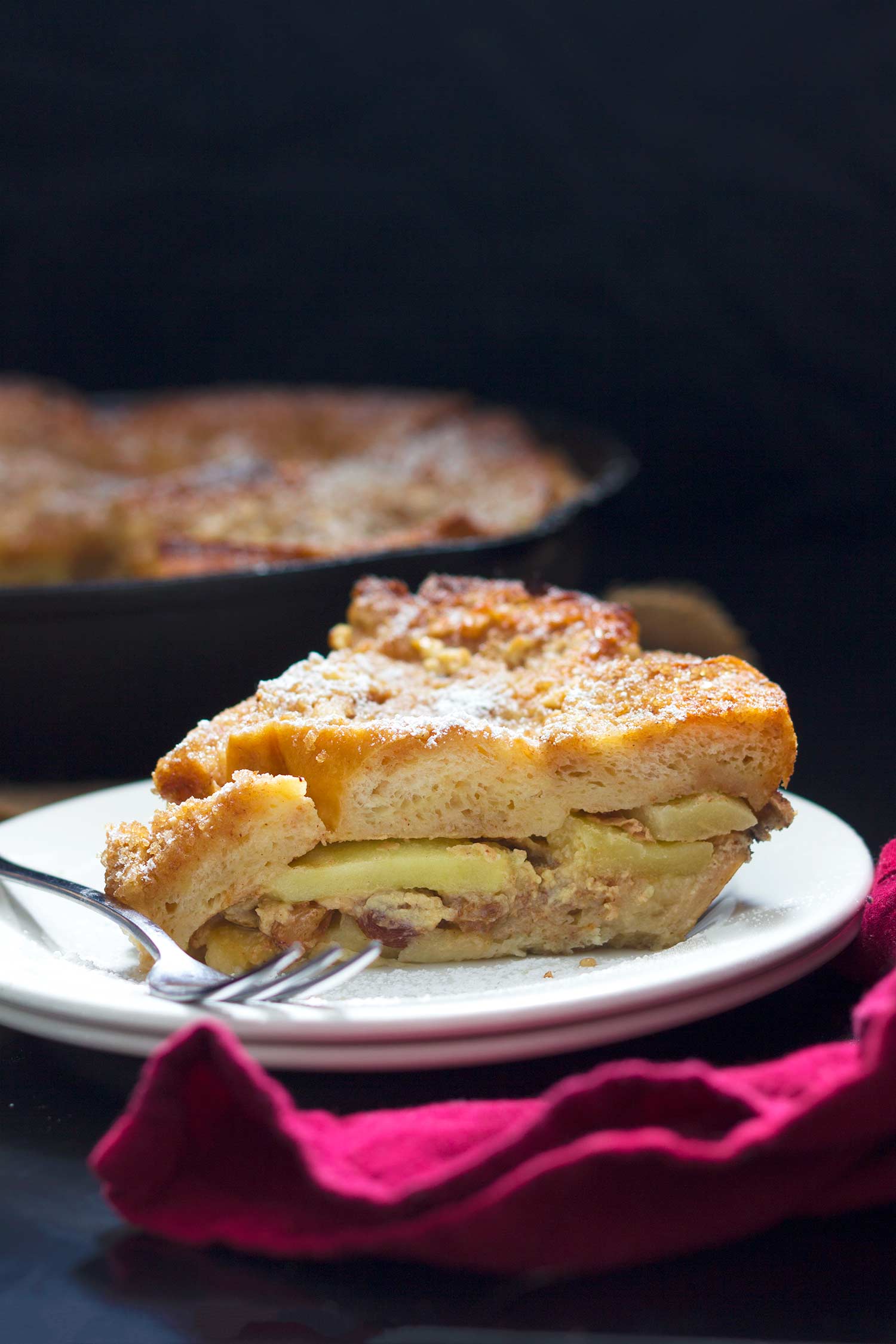
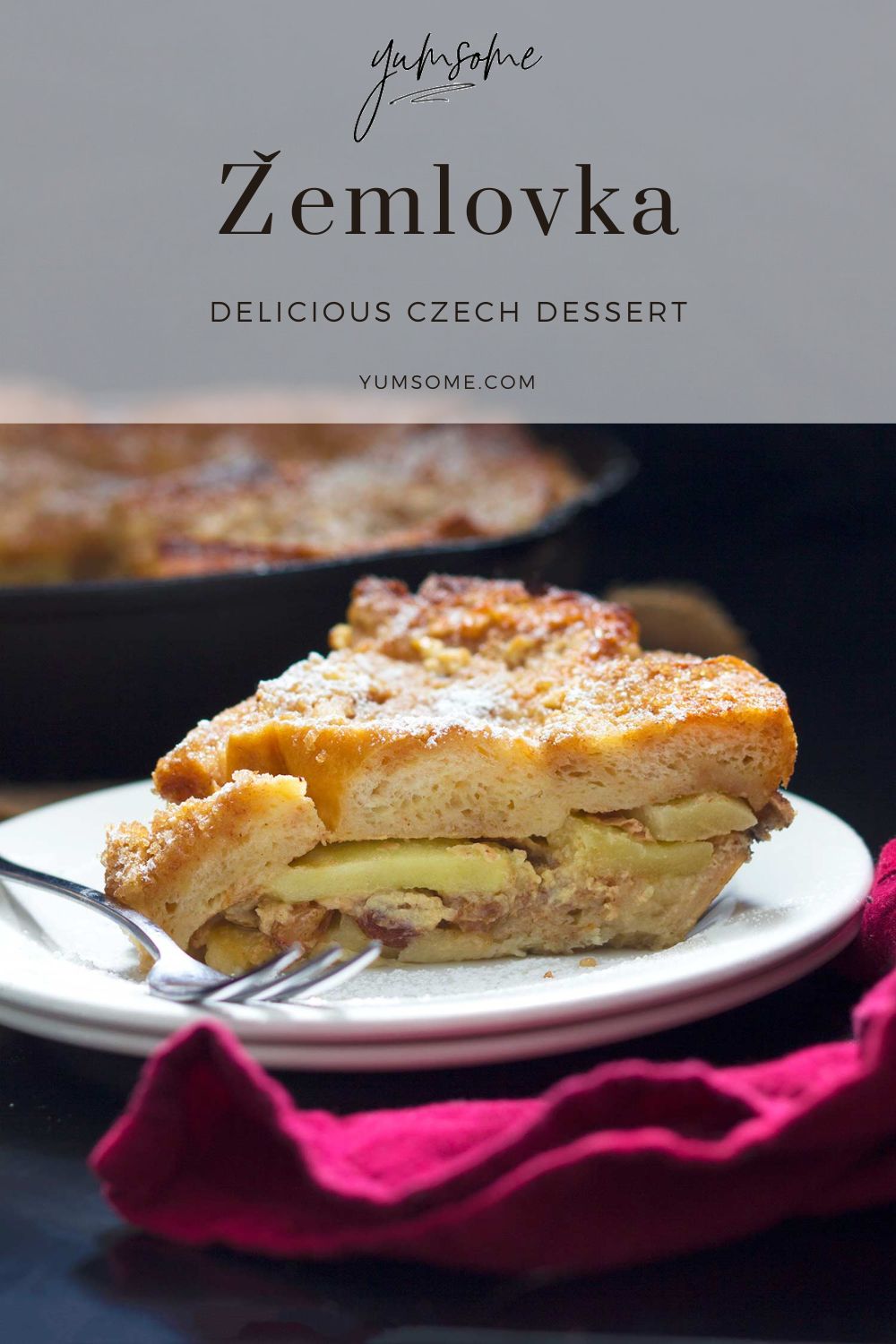
Hailing from the Czech Republic, žemlovka is a sweet - and gently spiced - fruit and bread dessert that's similar to British bread and butter pudding.
What is žemlovka?
Much like British bread and butter pudding - not to be confused with bread pudding, of course - žemlovka (known as zemlbába in Western Czechia, and žemeljni narastek / žemljev močnik in Slovenia) is a practical way to use up stale bread, relying mostly on everyday pantry ingredients.
That said, there’s a key difference: while the British version is always served as a dessert, žemlovka often appears as a main dish, typically after a bowl of something sour, such as a traditional soup, for example, kyselica.
By the way, both the names, žemlovka and zemlbába, are derived from the Bavarian word, Semmel (pronounced, 'zemmel'), which is a type of white bread roll that's used to make Semmelknödel - boiled bread dumplings, similar to the Czech, knedlíky.
History of žemlovka
Although žemlovka is firmly rooted in Northern Slavic cooking, its origins may actually lie further west. A similar Austrian dish, Scheiterhaufen (literally, 'pile' or 'pyre') - likely a reference to its layered look - is thought to date back at least to the first century AD, when it was allegedly mentioned by the Roman gastronome, Marcus Gavius Apicius.
By the late 1600s, this dish had taken on the name, Güldene Schnitten ('golden slices'). Over time, related dishes evolved into what many now recognise as French toast or eggy bread - though in Britain, the old name, poor knights of Windsor still lingers.
Thanks to its simplicity and thriftiness, žemlovka is widely available throughout the year in bakeries, cafés, and canteens across the Czech Republic, and it’s almost always served warm.
Czech bread
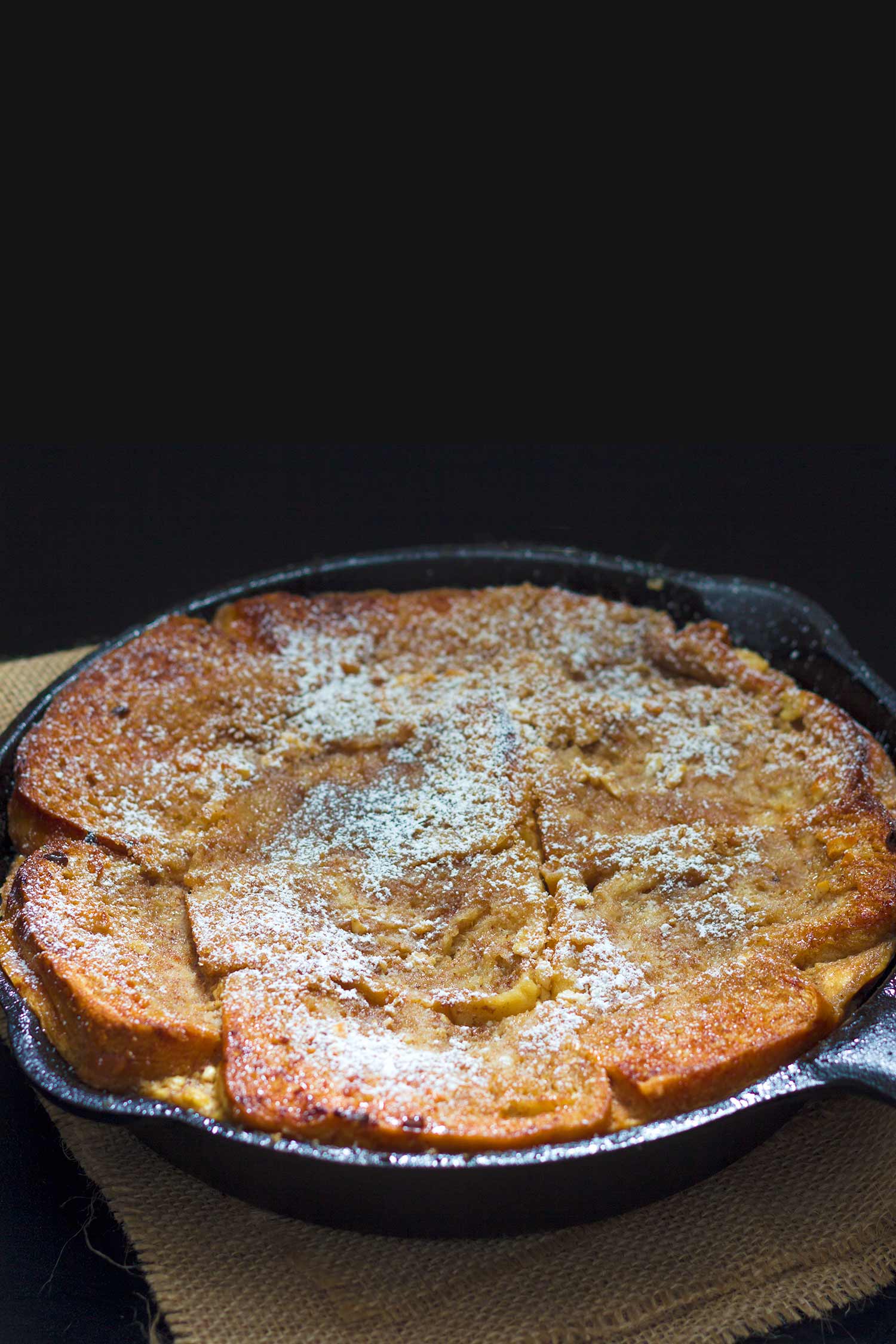
Like its Bavarian ancestor, the word, žemla, simply means 'bread roll'. Therefore, žemlovka refers to a baked dish made from bread rolls. In Czechia, the dish is made with rohlík - a crescent-shaped roll - or veka, a short, wide loaf that resembles a French baguette.
Veka is also used to make knedlíky, the Czech style of boiled dumplings, closely related to the German Knödel (which simply means, 'kneaded', and is where in English, we get the word, knot). Knedlíky are an everyday staple on Czech tables, and accompany most meals.
Since rohlíky and veka can be tricky to find outside Central Europe (although you may find them in specialist Central and Eastern European grocery stores), brioche works well as a substitute in this version. Pretty much any stale white bread will do, though, provided it isn’t too dense or chewy. Sourdough, rye, or other heavy breads will be too tough - don't use those!
Variations on a theme
There’s no single official set-in-stone method for making žemlovka. While some cooks soak the bread in a mixture of milk and eggs before layering it with fruit and spices, then baking it, others prefer to assemble everything dry, then pour the custard over the top. In some homes, žemlovka is even finished with a delicious layer of meringue.
Apples are the most commonly-used fruit but pears or plums can also be used. It really depends what you have to hand. There are some folk who grate the apples, some who stew them, and others who slice them - it really comes down to personal preference. In my recipe, I've opted for sliced apples, as I feel they give a bit more texture to the finished dish. But y'know, you do you!
Tvaroh (a fresh curd cheese) is also sometimes used between the layers of fruit and bread. Alternatively, it can be whisked up with the custard.
Whatever the variation, a few things stay the same: bread, dairy, eggs, sugar, fruit, and spices are always part of the mix.
Ingredients
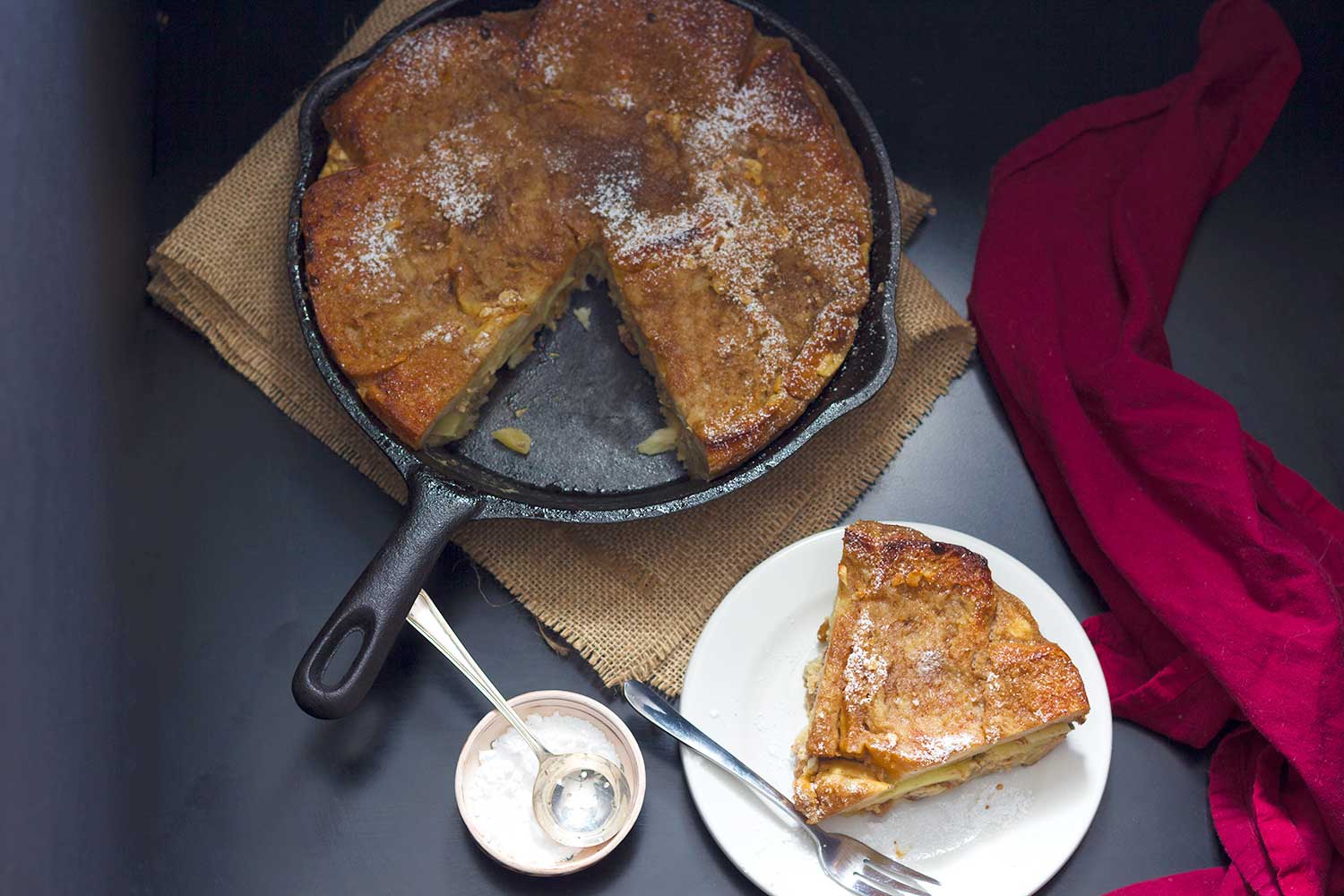
- Bread - 1-2 days old, and if not using traditional Czech rohlíky or veka, you can sub brioche. In fact, if you have any panettone or Kugelhopf lurking around, you could even use that. Currant buns work too, as do Hot Cross buns. I think chollah would also work.
- Apples - entirely your choice but I like to use sweeter ones, rather than tart types such as Granny Smith. Cooking apples (e.g. Bramley) work well, too.
- Raisins - I actually prefer sultanas (aka golden raisins / sultana raisins) because they are fat and juicy, and far more delicious than bog-standard raisins, in my opinion. But as usual, use what you have, and what you prefer.
- Eggs - medium-sized, and organic free range if you can get them. If not, please make sure they really are from hens that are allowed to roam freely outside.
- Butter - it really doesn't matter whether you use salted or unsalted butter in this žemlovka recipe. Personally, I prefer to use salted, as I feel it just adds a bit more richness and depth of flavour. My go-to salted butter for cooking is Country Life but I don't think it's available outside Britain. It comes in blocks of 250g, of which, 1.8g is salt. The rest is butter (made from just milk, nothing else). Basically, use what you have…. although I wouldn't recommend using your best Normandy salt marsh stuff - save that for hot toast and crumpets (yum)!
- Cream - double cream, which has a fat content of c. 48%. I think that consistency-wise, in the US, double cream is called 'heavy' cream but it has a lower fat content than our double. According to the wisdom of the Internet, there's something called 'manufacturer's cream' that's very close. Apparently, it can be purchased at Costco. But in all honesty, as long as you use a cream with a fat content over 30%, you'll be fine. NOTE: you can make double cream at home. For the amount required in this recipe, gently melt around 30g (c. ¼ stick) unsalted butter, and then blend it with 90ml (6 tablespoons) of room temperature whole milk.
- Milk - since there's cream in this recipe, there seems little point in using skimmed or semi-skimmed. However, if you don't have whole milk, then use what you have. As long as it's not sterilised, evaporated, condensed, or long-life!
- Sugar - basic white granulated is fine. For added richness, you could use soft brown sugar instead. For the top dusting, use icing sugar (powdered sugar).
- Vanilla - use a good vanilla bean extract (e.g. Taylor & College). Don't use vanilla essence - it's not nice, and is pretty much synthetic and nasty!
- Cinnamon - try to use real ground cinnamon, not cassia. Unfortunately, cassia seems to have become the default in most supermarkets, and while it's not terrible, it lacks the nuance of true cinnamon.
How to make žemlovka
- Soak some sultanas or raisins in strong black tea.
- Prepare your pan by greasing it, then sprinkling with breadcrumbs.
- Peel, core, and slice some apples, then soak in a bowl of cold water and lemon juice.
- Make some cinnamon sugar, and set aside.
- Make custard by mixing together milk, cream, eggs, sugar, and vanilla.
- Slice the bread, soak half of it in the custard mix, then place a layer on the bottom of the greased pan.
- Drain both lots of fruit, and spread the sultanas over the top of the bread, followed by the apples. Sprinkle over the cinnamon sugar.
- Soak the rest of the bread, and arrange the slices over the top of the apples.
- Pour over the rest of the custard mixture, then dot pieces of butter on the top of the žemlovka.
- Bake for 40 minutes, then allow to rest for 15 minutes before serving warm, sprinkled with icing sugar (powdered sugar).


Tips
- If you're using a baking dish or cake tin, you can skip the greasing stage all together, and simply use a silicone parchment liner (either pre-formed or cut to fit from baking parchment).
- Do be sure to use stale bread; it soaks up the custard mixture without going soggy and breaking up.
- If using brioche you may wish to reduce the sugar by a couple of tablespoons. I don't… but some folk may wish to!
- You can put the assembled žemlovka in the fridge for an hour or so before baking (cover with foil); this helps the bread soak up the custard, and will give an even richer result.
- For a more authentic pudding, soak your sultanas (or raisins) overnight in rum. For non-drinkers, strong black tea is perfectly acceptable. Although it's best to soak the dried fruit overnight, if you don't remember, soaking for 20-30 minutes in hot black tea will be fine.
- Any leftovers (as if!) make a fab breakfast if you fry up slices of žemlovka in hot butter. A cast iron skillet is perfect for this! (I've had my Lodge skillet for around 30 years, and use it for all kinds of bakes - as well as for frying, of course.)
Whether served as a main, a dessert, breakfast, or even something in between, žemlovka is the type of dish that’s delicious and comforting, and so more-ish. Dobrou chut'!
📖 Recipe
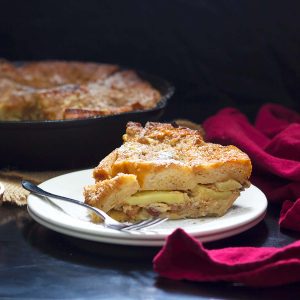
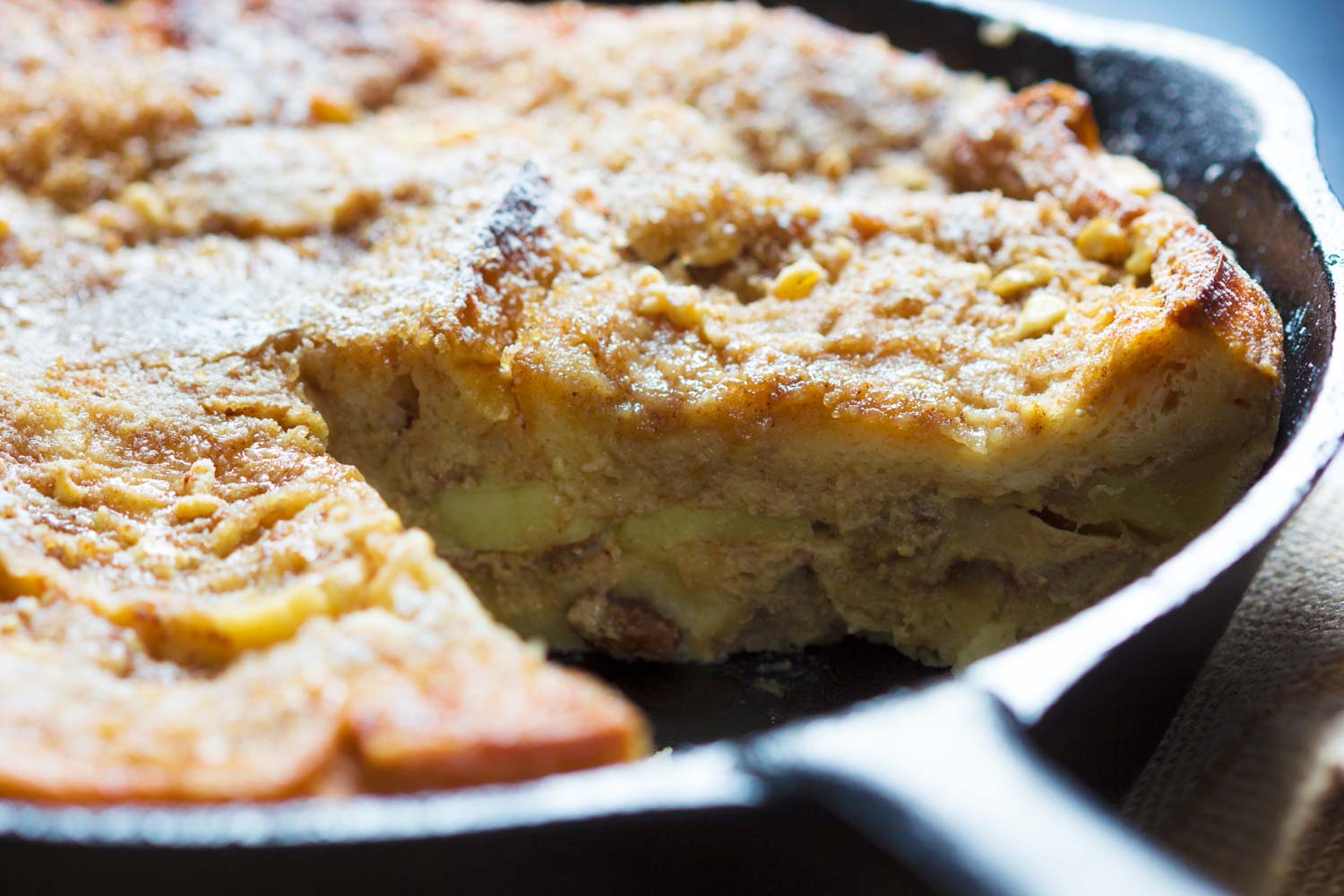
Žemlovka, a Traditional Czech Bread & Butter Pudding Recipe
Ingredients
Pan Prep
- 10 g butter
- 2-3 tablespoons fresh breadcrumbs (not needed if using a non-stick baking dish or pan)
Fruit
- 100 g sultanas (or raisins)
- 120 ml strong black tea
- 500 g apples (c. 3-4 medium-sized ones)
- 1 tablespoon lemon juice
- 2 tablespoons granulated white sugar
- 1 teaspoon ground cinnamon
Custard
- 400 ml whole milk
- 120 ml double cream (US readers: use heavy or manufacturer's cream - fat content over 30%)
- 3 medium eggs
- 100 g granulated sugar
- ½ teaspoon vanilla extract
Assembly
- 250 g 1-2 day-old bread (e.g. rohlíky, brioche, panettone)
- 75 g butter (cold)
To serve
- 2 tablespoons icing sugar (powdered sugar)
Equipment
- 25cm(10 inch) cast iron skillet (or a 20x30cm (8x12 inch) oven dish)
Instructions
Prepare the pan
- Grease your baking dish (or cast-iron skillet) with a knob of butter, and then dust it with 2-3 tablespoons of fresh breadcrumbs (if using). Set aside for now.
Prepare the fruit
- In a bowl, soak 100g (3½ oz) of sultanas or raisins in 120ml (½ cup) of hot strong black tea, and set aside to plump up.
- Peel and core 500g of apples, then cut into slices. I prefer mine to be slightly on the thicker side - c. 5mm (¼ inch). Feel free to cut yours thinner if you like.
- Place the apple slices into a large mixing bowl, and cover with cold water and 1 tablespoon of lemon juice (this will help to stop them going brown).
- Mix together 2 tablespoons of granulated white sugar and 1 teaspoon of ground cinnamon. Set this aside for now.
Make the custard
- In another large mixing bowl, whisk together 400ml (1⅔ cups) of whole milk, 120ml (½ cup) double / heavy cream, 3 medium eggs, 100g (½ cup) granulated white sugar, and ½ teaspoon of vanilla extract.
- If you're not going to rest the assembled žemlovka before baking, pre-heat your oven now to 180° C (350° F, gas mark 4).
Prepare the bread
- Slice the bread; I like mine to be quite thick - around 1,5cm (½ inch).
Assembly
- Dip several slices of bread into the custard, and arrange them in a single layer on the bottom of your prepared pan.
- Drain the sultanas / raisins (keep the rum, if used - it'll taste lovely; otherwise, discard the cold tea), then spread them over the bread.
- Drain the apples, and blot dry with a clean tea towel.
- Next arrange the sliced apples on top of the sultanas (or raisins) in an even layer, and sprinkle over the cinnamon and sugar mix you made earlier.
- Dip the remaining slices of bread, and arrange on top of the apples. Drizzle any remaining custard mixture over the top, and gently press down on the bread with a fork or flexible spatula in order to soak up as much as the custard as possible.
- Cut up 75g (c. 5 tablespoons) of cold butter, and dot pieces over the top of the žemlovka.
Rest (optional)
- Cover the žemlovka with aluminium foil (or a stretchy silicone lid), and place in the fridge for 1 hour.
Bake
- Place in the centre of the oven, and bake for around 40 minutes, until the top is golden brown and crunchy.
To serve
- Remove from the oven, and set aside for 15 minutes. Just before serving, sprinkle with 2 tablespoons of icing sugar (powdered sugar).
Storing leftovers
- Fridge - in an airtight container for up to 3 days.
- Freezer - this recipe is not suitable for freezing.
Reheating
- Cut into thin slices, or break into chunks, and fry in hot butter until crispy.
Notes
- 1 cup = US cup = 240 ml
- 1 tablespoon = US/UK = 15 ml
- 1 fl oz = US = 30 ml




Leave a Reply